Founder • Product Builder • Customer-Driven Problem Solver

I listen for the problems people keep running into. Then I build a better way.

I have spent more than twenty years talking with customers, candidates, business owners, and the people doing the actual work.

When I hear the same problem enough times, I usually start wondering why nobody has fixed it. The projects below are the answers I came up with.

See what I’ve built

Featured Work

The work always starts the same way: someone tells me what is not working.

I ask questions, listen carefully, and try to understand the problem behind the problem. Sometimes the answer is software. Sometimes it is a better process. Sometimes it becomes a business.

01

Founder • Live Business

Less Overlap

The problem: Business owners kept telling me they were paying for leads and prospect lists that were also being sold to their competitors.

What I built: Less Overlap gives one company exclusive access to a protected local audience.

No shared leads.
One market.
One company.
02

Founder • Recruiting Business

placingITpeople

The problem: Companies were spending too much time interviewing candidates who were not the right fit.

What I built: A boutique technology recruiting business focused on understanding people before making an introduction.

Better conversations.
Better introductions.
Better outcomes.

Platforms I’ve Built

These were built to solve problems I was dealing with in real businesses.

I was not looking for reasons to build more software. I was looking for better ways to get the work done.

Built for placingITpeople

The app that started it all.

01
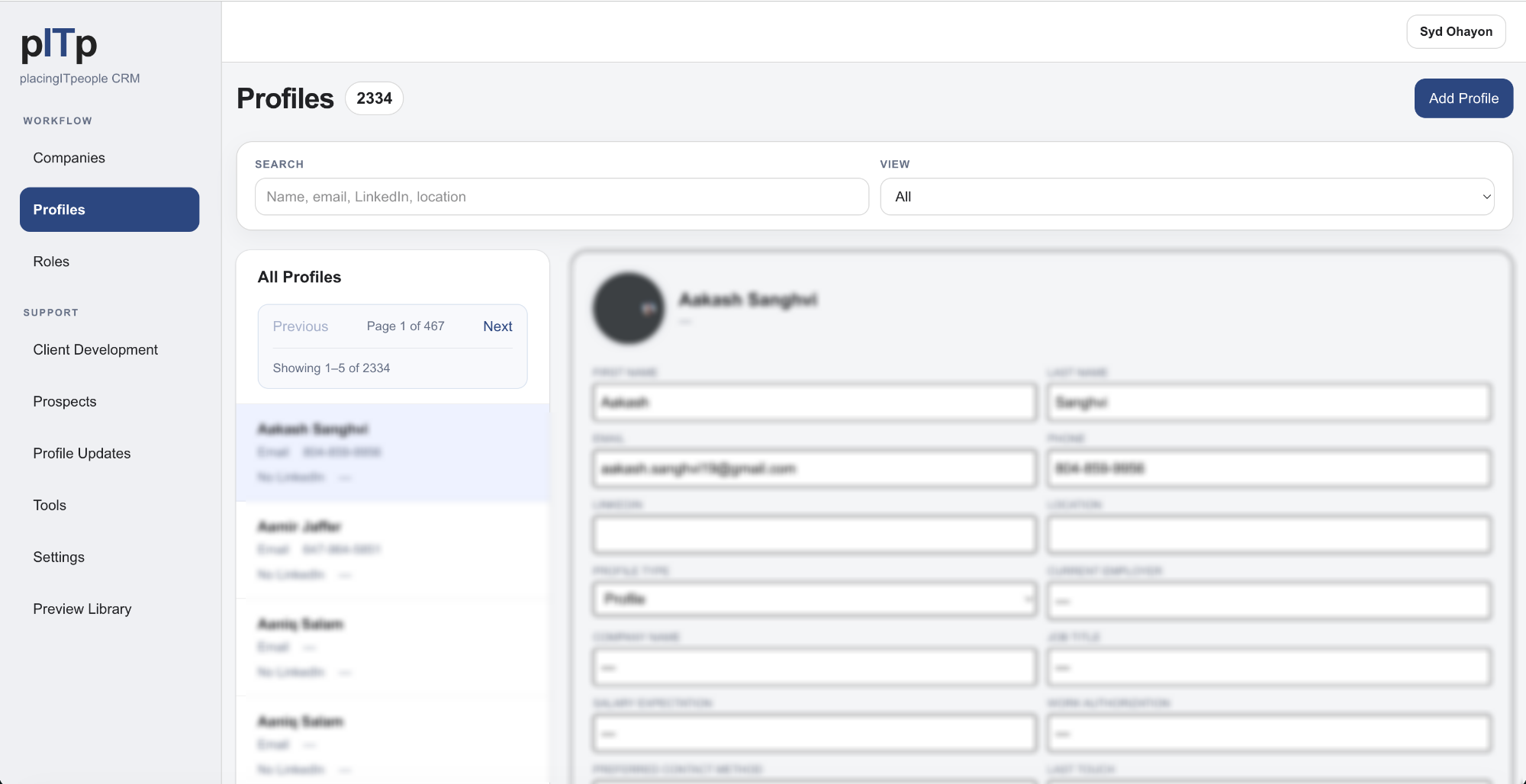
placingITpeople CRM profile workspace with searchable candidate records

Origin Platform • Built for Operations

placingITpeople CRM

placingITpeople had grown beyond what notes, spreadsheets, and disconnected tools could handle. I needed one place for companies, candidates, roles, conversations, and follow-up.

So I built it. That project changed how I looked at software and became the starting point for almost everything I built after it.

I built it for my own business. It ended up changing the direction of my work.
Built for Less Overlap

One business led to a whole set of tools that work together.

Less Overlap needed more than one app. It needed good data, a safe way to move that data, a place for clients to work with it, and tools for the people having the conversations.

Core Infrastructure • Operational Workflow

Data Collection Engine

The information I needed was out there, but it was spread across large government files and organized in ways that did not line up.

I got tired of pulling it together by hand, so I built an engine that collects it, checks it, and puts it into a format the rest of Less Overlap can actually use.

Workflow Engine • Operational Workflow

Prospect Handoff Engine

Finding good prospects was only half the job. We still had to get those records into the right system without losing fields, creating duplicates, or breaking the import.

I built Handoff to check every file, clean up the records, and make sure they are ready before they reach Call Assist.

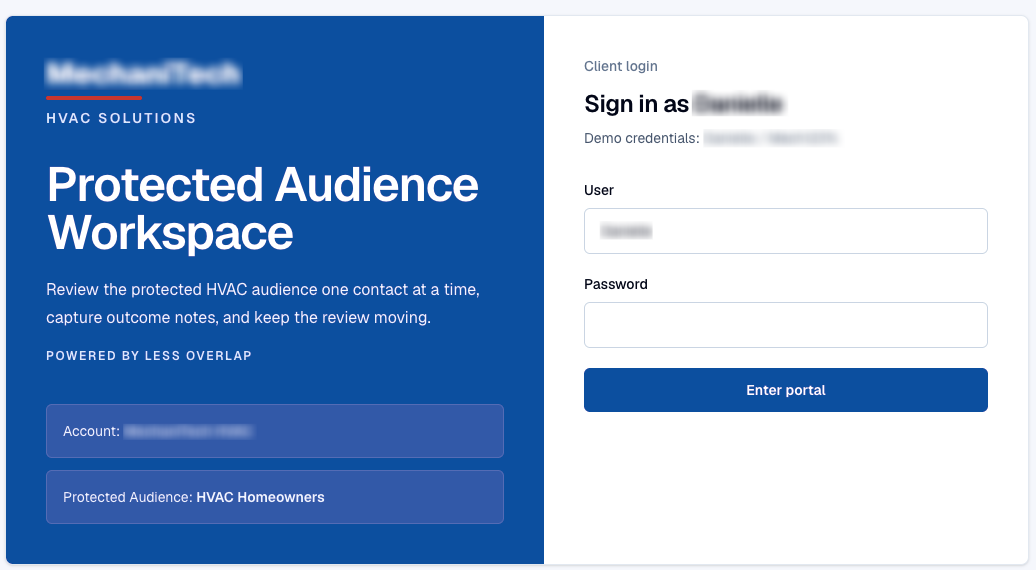
Branded Protected Audience Workspace client login

Client Platform • Built for Client Work

Protected Audience Workspace

I did not want clients signing into something that looked like my software. I wanted each workspace to feel like it belonged to them, while still giving them a simple way to review their audience, add notes, and track results.

Operations Platform
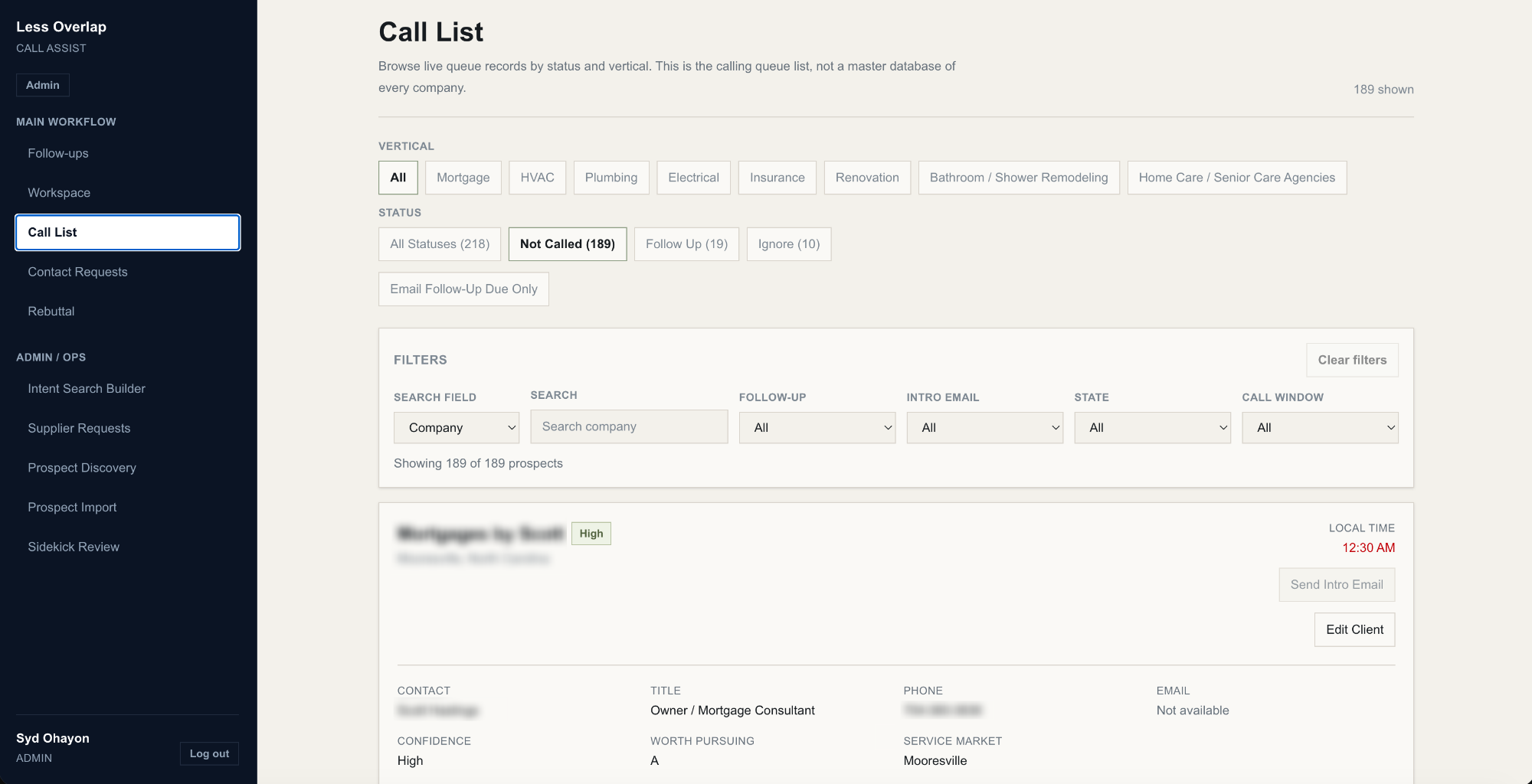
Call Assist prospect queue with market, vertical, status, and workflow filters

Built for Calling Operations

Call Assist

Call Assist keeps the calling work organized. It shows who needs to be called, who owns the record, what happened last time, and what needs to happen next.

When a caller opens Side Kick, the prospect information goes with them. When the call is finished, the notes and outcome come back.

Prospect queuesCaller assignmentsOutcomesRetries & callbacksFollow-up & handoffs

Standalone Conversation Platform

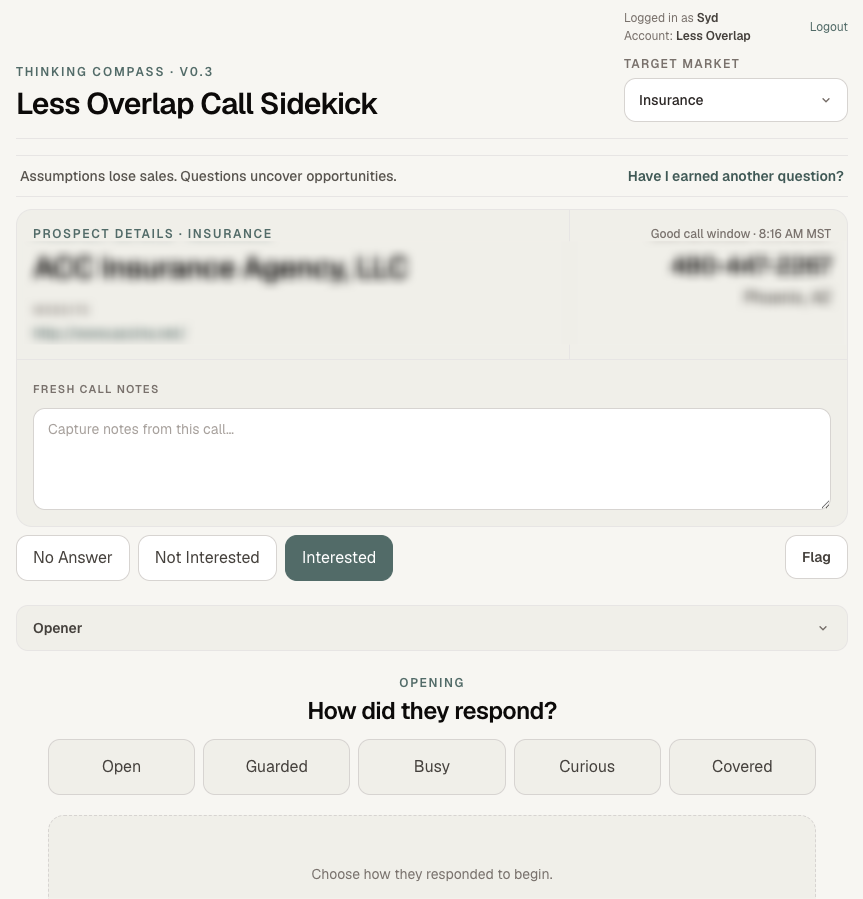
Side Kick

A tool that helps people think during a customer conversation.

Side Kick helps a caller read the conversation, decide what matters in that moment, and choose a useful next question. It guides the thinking without turning the call into a script.

The Thinking Compass changes the guidance based on what is actually happening: Open, Guarded, Busy, Curious, or Covered. At the end, it records what was agreed and what happens next.

Side Kick Thinking Compass showing the Open conversation state and recommended next steps
How it began

Side Kick started as a small idea inside Call Assist. Once I saw that it could help with many kinds of conversations, I pulled it out and gave it room to become its own product.

Call AssistProvides prospect and campaign context
Side KickGuides the live conversation
Call AssistReceives outcomes and follow-up

Independent Platforms

A few other problems I could not leave alone.

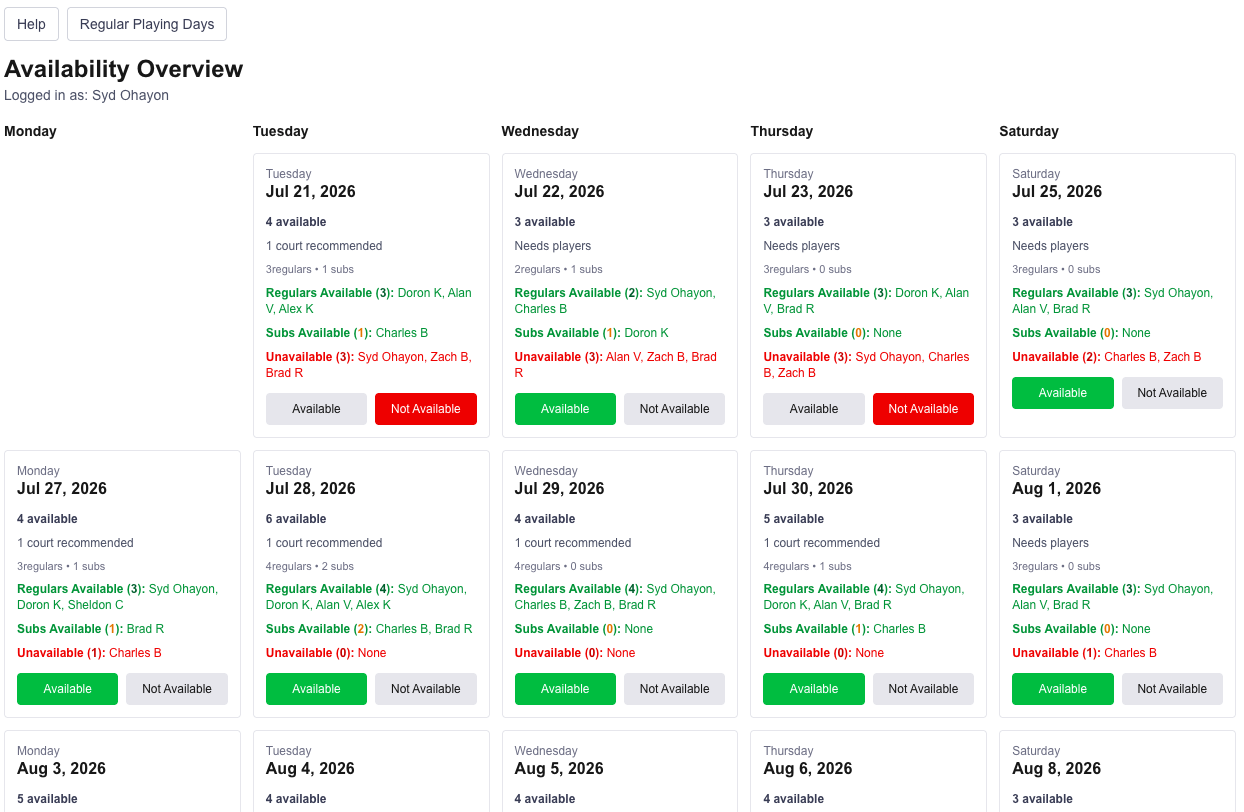
Availability Platform overview showing upcoming dates, available participants, open spots, and organizer recommendations

Community Scheduling Platform

Player Availability Platform

Organizers can quickly see who is available and fill open spots for games, leagues, programs, tournaments, and community events.

I first built it for a pickleball group, but the same problem comes up in sports, clubs, card groups, and all kinds of organized activities.

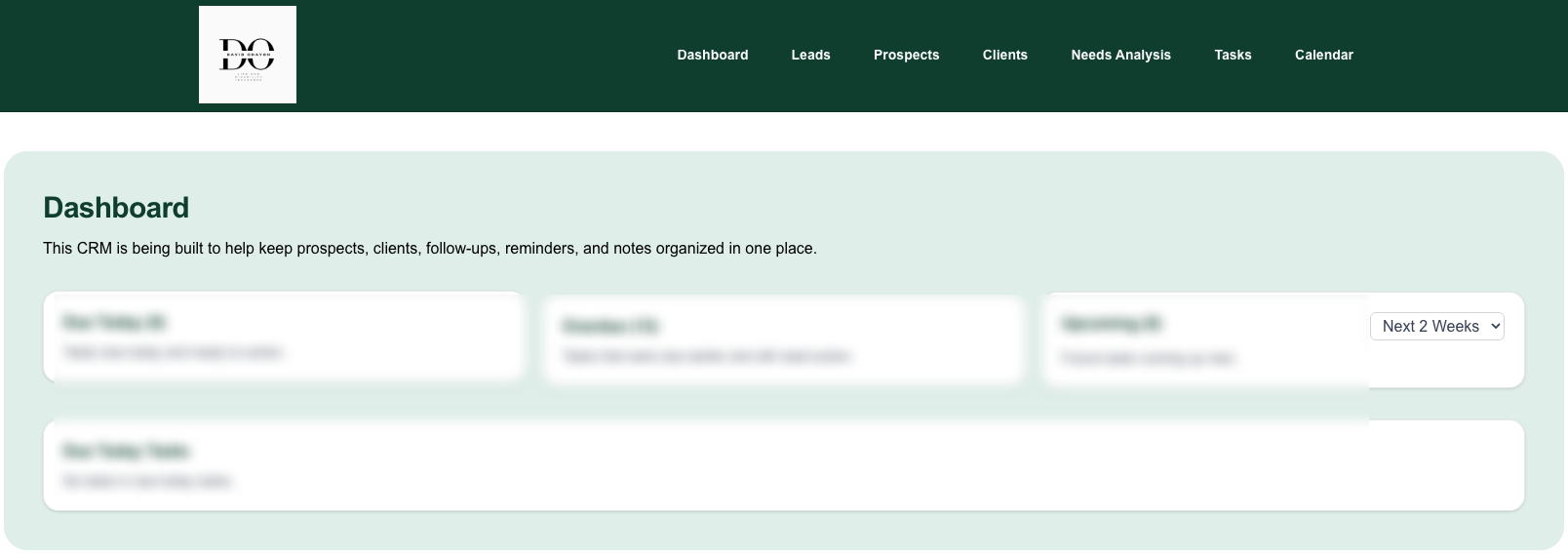
Insurance Prospect Lifecycle Platform dashboard showing prospects, clients, follow-ups, reminders, and notes

Client Workflow Platform

Insurance Prospect Lifecycle Platform

An insurance CRM built around the way an advisor actually works, from the first conversation through follow-up, needs analysis, conversion, and renewal.

It keeps leads, prospects, clients, tasks, and next steps in one place, so the advisor can see who needs attention today.

Current work: Email communication, text messaging, renewal reminders, and additional workflow automation are being developed and tested.

How I Build

I build things that make the work easier.

The technology comes later. First I need to understand what keeps going wrong, who it affects, and what a useful answer would look like.

01

Customer first.

The person dealing with the problem usually knows more than anyone else. I start by listening to them.

02

Understand the real need.

What someone asks for is not always what will help most. I ask more questions, build the smallest useful answer, and see how it works in real life.

03

Solve the problem.

The answer should make the job simpler. If it creates more work, it is not the answer yet.

04

Stop doing the same work twice.

Good software should remember the details, connect the steps, and get out of the way.

I solve problems with code.

Contact

Have a problem that keeps coming up?

Tell me what keeps happening. I would much rather hear the real problem than a polished pitch.